
Middle Eastern Mental Health Awareness: Exploring the Impact of Cultural and Communal Expectations
Mental health and overall wellness consist of a balance of physical and emotional health. One’s feelings, responses to conflict, diet, and activity all contribute to the delicate equilibrium that can either promote or hinder one’s holistic well-being. As mental illness becomes a growing issue across the globe amongst adolescents in particular, conversations, treatments, and overall attitudes have begun to emerge amongst various regions and cultures — including the Middle East.
The Culture
The Middle East is a region that encompasses a diverse range of countries, cultures, and traditions. A rich culture is evident in its art and literature, its cuisine, and the celebrations that create a sense of community and cohesion! At the heart of Middle Eastern culture lies a collective society, where a sense of community and interdependence are deeply ingrained. As opposed to Western individualism, here the focus is on community improvement, rather than one’s own well-being. This results in both positive and negative outcomes. On the one hand, because the focus is not wholly on oneself, it’s a positive thing! Isolation, a key promoter of anxiety and depression, is decreased as the community is highly valued. On the other hand, because this value is placed so heavily on the community and others, there is an expectation to not only receive from the community but reciprocate and provide. This can produce a lot of pressure to provide and help others, putting oneself and one’s needs on the back burner. In the Middle East, about 93% of the region follows the Islamic faith which embodies a set of fundamental values like piety, compassion, justice, humility, and community. With these values of the faith come customs and traditions that are followed and held in high regard — providing a connection to history and heritage to individuals and communities.
Mental Illness in the Middle East – Concerns
In Middle Eastern cultures, the priority placed on familial and communal honor results in heavy expectations and pressures on individuals. These cultural expectations commonly encountered within the community, unfortunately, make mental illness a silent issue. A strong stigma emerges where mental illness is seen as an issue and associated with the individual and their relationship with God, failure, judgment, and even fear. This generates huge barriers for those seeking help, preventing both mental health awareness and treatments from occurring. Though the stigma and factors against mental illness are hard to overcome, it’s also important to consider the troubles that arise when those who are Middle Eastern do seek help. Unfortunately, many difficulties can emerge, including dismissals and advice to “seek God” as well as linguistic barriers and a lack of cultural awareness and sensitivity — making it even harder to receive the help needed despite looking for it.
Prevalence Among Youth
With social media, adolescents have the world at their fingertips yet have never been more disconnected. Anxiety and depression have skyrocketed among youth due to increased isolation, decreased physical activity, and decreased self-esteem because of the fast-paced, endless world of social media. High screen times also result in reduced attention spans, reduced social skills due to the lack of face-to-face interaction, and insomnia due to blue lights from devices, again bringing about huge characteristics of anxiety and depression. Middle Eastern youth living in Western countries may have a layered experience with unique challenges related to generational gaps. Straddling two cultures can contribute to feelings of identity confusion, isolation, and stress. On top of all of that, having to describe a very different experience to your parents can be all the more frustrating potentially leading to mental health issues.
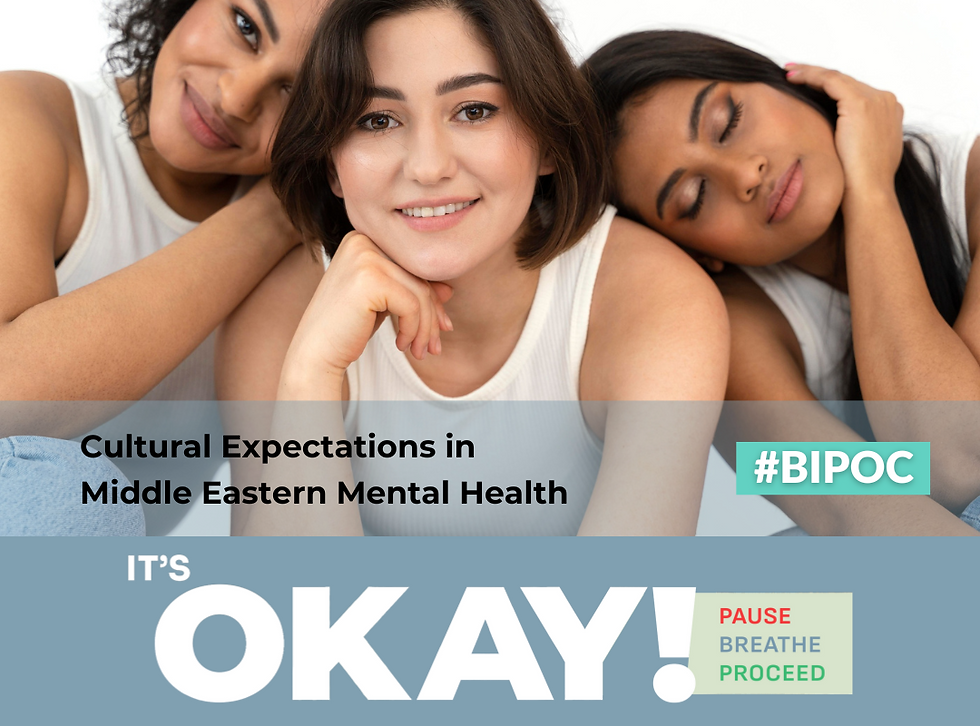
Our Her Nexx Chapter community invites you to join us for It’s OKAY! Pause, Breathe, Proceed – BIPOC streaming on Monday, July 31st at 4 pm PT/ 6 pm CT/ 7 pm ET. Hear from our multicultural experts who are making a difference in treating BIPOC mental health issues such as the ones faced by Middle Eastern adolescents. Register for this free event here.
Change
To address mental health stigmas, raise awareness, and increase mental illness treatments amongst Middle Eastern communities, it is essential to foster open conversations, promote education and understanding about mental health, and work toward building accessible and culturally sensitive mental healthcare services. This can be achieved through:
1. Education on what mental illness is, signs to look for, and treatment options are vital to removing the stigma around mental health.
2. Professional training amongst trusted leaders in communities like mentors, religious leaders, and educators.
3. Representation where those in the community share their stories, promote understanding, and challenge stereotypes.
Resources
Attached below are some valuable resources specifically for Middle Eastern Communities that can provide assistance for mental health concerns, should you or a loved one require support:
Her Nexx Chapter invites you to join our Community where women from around the world are connecting, exploring, and transforming lives.
The Future of Connection for Women

Hello! My name is Olivia Marbury, and I am currently a senior at the University of Texas at Austin, double majoring in Psychology and Plan II Honors. Literature, art, music, and writing are where I find refuge. Words in particular have been a knack of mine since I was a kid where I’ve been able to find my voice and (sometimes) be brave enough to share it! Whether it’s my personal diary or an article showcasing others’ experiences, words for me are the catalyst for community and change. Whether it’s sharing a meal or talking to a friend, I’ve found the most self-care and wellness because of the love of others – and hope to provide the same to the people around me! Regardless of my role or responsibility, one constant I carry with me is vulnerability, coupled with an open ear to make space for others to do the same. The art of listening, often underrated, forms the backbone of my approach. The catalyst of change is understanding, which can only occur by listening to others' unique stories and perspectives. My goal is to contribute and foster inclusivity in every setting I encounter.

